
El Niño Explained
How warming in the tropical Pacific Ocean can reshape rainfall, temperature, drought, floods, agriculture and marine ecosystems across the planet.
What Is El Niño?
El Niño is the warm phase of a natural climate pattern known as the El Niño–Southern Oscillation, or ENSO. Although it develops in the tropical Pacific Ocean, its influence can extend across much of the world.
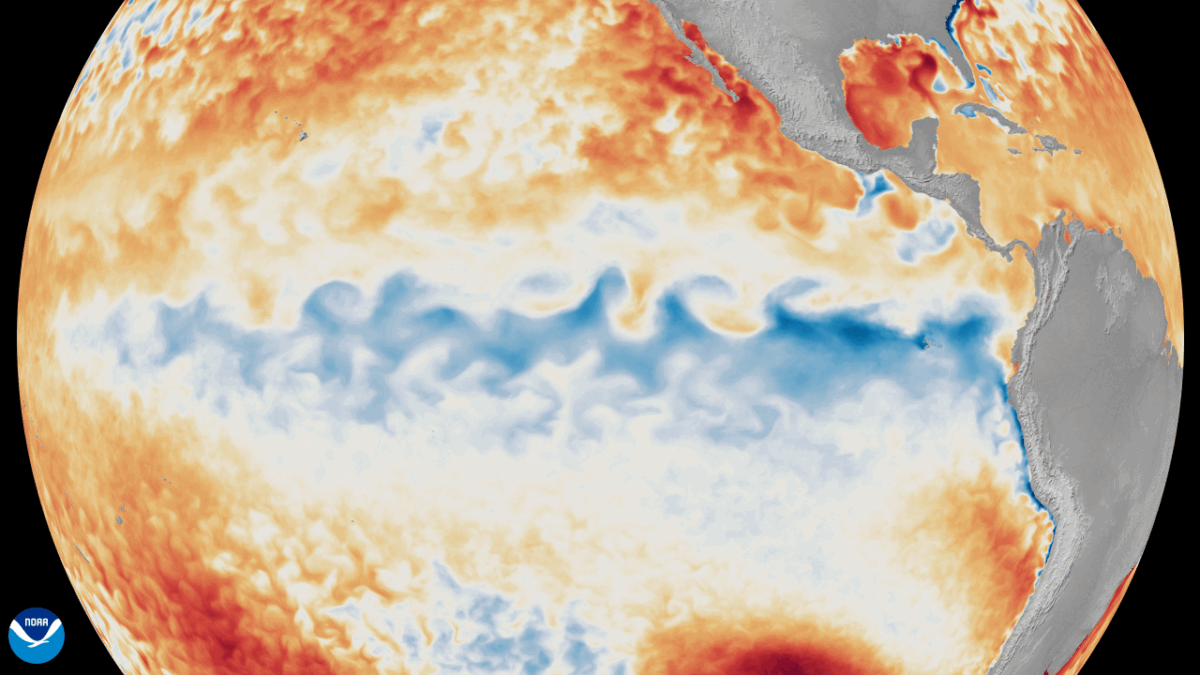
El Niño occurs when sea-surface temperatures across parts of the central and eastern tropical Pacific become warmer than normal. At the same time, winds and atmospheric circulation across the Pacific begin to change.
These ocean-atmosphere interactions can affect rainfall, temperature, storms, drought conditions, agriculture, fisheries and ecosystems thousands of kilometres away.
How Does El Niño Form?
Under normal Pacific conditions, easterly trade winds push warm surface water toward Indonesia and Australia. Meanwhile, colder, nutrient-rich water rises toward the surface near the western coast of South America.
This upward movement of deeper ocean water is called upwelling.
How the El Niño Process Develops
1. Trade Winds Weaken
Normal east-to-west Pacific trade winds lose strength.
2. Warm Water Shifts East
Warm surface water spreads farther across the central and eastern Pacific.
3. Weather Patterns Change
Atmospheric circulation and rainfall patterns begin changing across different regions.
El Niño vs La Niña
El Niño and La Niña represent opposite phases of the ENSO cycle. They influence the tropical Pacific in different ways and can produce different weather effects around the world.
🔥 El Niño
- Warmer central/eastern tropical Pacific
- Trade winds generally weaken
- Cold-water upwelling weakens
- Warm water spreads farther east
- Known as the warm ENSO phase
❄️ La Niña
- Cooler central/eastern tropical Pacific
- Trade winds generally strengthen
- Cold-water upwelling strengthens
- Warm water remains farther west
- Known as the cool ENSO phase
Conceptual ENSO Conditions
This visualization is a simplified conceptual comparison intended to explain the physical differences between normal Pacific conditions and El Niño. Values are relative educational indices, not observational measurements.
How El Niño Can Affect Global Weather
Changes in tropical Pacific temperatures can alter atmospheric circulation. This can influence rainfall and temperature patterns far beyond the Pacific itself.
Heavy Rain & Flooding
Some regions may experience wetter-than-normal conditions, increasing the possibility of flooding, landslides and infrastructure damage.
Drought
Other areas can receive less rainfall, increasing pressure on water supplies, agriculture and natural ecosystems.
Temperature Changes
Altered atmospheric circulation can contribute to warmer or cooler conditions depending on location and season.
Wildfires
Where El Niño contributes to hot and dry conditions, vegetation can become drier and wildfire danger may increase.
🌊 El Niño and Marine Life
One of the clearest effects of El Niño can occur beneath the surface of the Pacific Ocean.
Under normal conditions, upwelling near South America transports cold, nutrient-rich water toward the surface. These nutrients support phytoplankton, which form an important foundation of marine food webs.
During El Niño, weaker upwelling may reduce nutrient availability. Changes can then spread through the marine ecosystem, influencing plankton, fish populations, seabirds and commercial fisheries.
🌾 Agriculture and Food Security
Agriculture is highly sensitive to rainfall, temperature and water availability. El Niño can disturb normal seasonal weather patterns and create difficulties for farmers.
Water Shortages
Reduced rainfall can lower reservoir levels and increase pressure on irrigation systems.
Crop Production
Drought, excessive rainfall or unusual heat can reduce yields or damage crops during sensitive growth periods.
Food Prices
Large agricultural disruptions can contribute to fluctuations in food supply and market prices.
Fisheries
Changes in ocean temperature and nutrient supply can influence fish distribution and fishing productivity.
Can El Niño Affect the Economy?
Because climate influences agriculture, fisheries, infrastructure, energy and water availability, powerful El Niño events can have economic consequences.
Agricultural production losses • Changes in food prices • Fisheries disruption • Flood damage • Wildfire losses • Water-management challenges • Infrastructure damage • Changes in electricity demand.
How Scientists Monitor El Niño
Scientists continuously monitor conditions across the tropical Pacific to identify changes that could indicate a developing El Niño or La Niña event.
El Niño and Climate Change
El Niño and climate change should not be considered the same phenomenon.
El Niño is a naturally occurring climate phenomenon associated with interactions between the Pacific Ocean and atmosphere.
Human-caused climate change describes long-term changes in Earth's climate primarily associated with increasing greenhouse gas concentrations.
Nevertheless, El Niño now occurs against the background of a warming global climate. Scientists therefore study how natural ENSO variability interacts with long-term climate change.
Is El Niño Dangerous?
El Niño itself is not a hurricane, cyclone or individual weather event. It is a large-scale climate pattern.
However, changes associated with El Niño can influence the probability of hazardous conditions in different parts of the world.
Flooding
Extreme rainfall can increase flood and landslide risk.
Drought
Reduced rainfall can create water and agricultural stress.
Heat & Fire
Dry conditions can increase heat and wildfire risks.
Food Security
Changing climate conditions may affect agricultural production.
What Does El Niño Mean for Sri Lanka?
Sri Lanka is influenced by complex interactions involving the Indian Ocean, monsoon systems and large-scale tropical climate patterns.
El Niño can influence atmospheric circulation across the tropics and may contribute to changes in rainfall patterns affecting South Asia. However, the effects are not identical during every El Niño event.
For this reason, local forecasts and information from national meteorological authorities remain important when assessing the likely impact of a specific ENSO event on Sri Lanka.
Understanding a Connected Climate System
El Niño demonstrates just how closely Earth's oceans and atmosphere are connected.
Changes in winds and ocean temperatures across one part of the Pacific can influence rainfall, temperature, agriculture, ecosystems and economies thousands of kilometres away.
Scientists cannot prevent El Niño, but satellites, ocean observations and increasingly sophisticated climate models can help detect developing conditions and improve seasonal forecasts.
Understanding El Niño and La Niña therefore helps communities, farmers, businesses and governments prepare more effectively for climate variability.
Frequently Asked Questions
El Niño is a natural climate pattern involving unusually warm water across parts of the central and eastern tropical Pacific Ocean. These changes can affect weather patterns around the world.
Many El Niño episodes last around nine to twelve months, although some events can continue for longer.
El Niño represents the warm phase of ENSO, while La Niña represents its cool phase. They involve different ocean temperature, wind and upwelling conditions across the tropical Pacific.
No. El Niño is a naturally occurring climate phenomenon. Human-caused climate change is a longer-term process. Scientists, however, study how ENSO events interact with a warming climate.
El Niño can influence large-scale tropical atmospheric circulation and therefore may affect rainfall patterns around South Asia. The exact influence on Sri Lanka varies between events.
NOAA Pacific Marine Environmental Laboratory — El Niño / ENSO Information
NOAA Ocean Service — What are El Niño and La Niña?
Post a Comment